


Grounds for Change is focused on supporting fair trade organic coffee growing cooperatives and providing our customers with the highest quality fair trade certified coffees available.
Our long-standing promotion of fair trade coffee has been unwavering since our inception in 2003 and we roast fair trade organic coffee exclusively. We strive to work with the same fair trade coffee growing cooperatives every year to help provide predictable sales volumes to these smallholder producer groups. In several cases, we have worked with the same groups every year since their own formation.
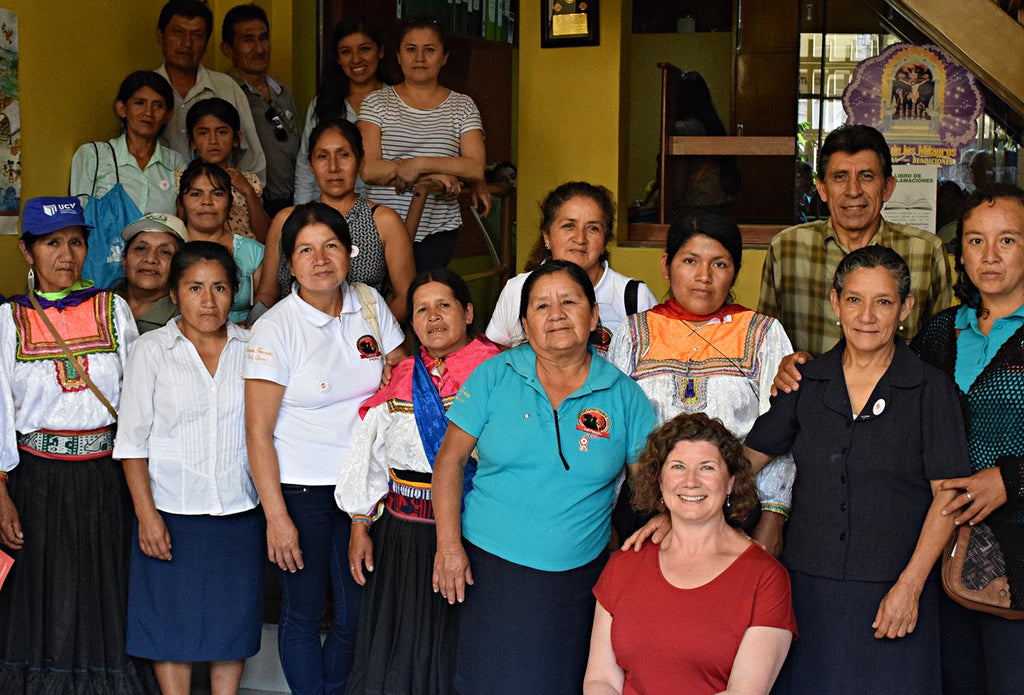 Cafe Femenino quarterly meeting. Northern Peru.
We promote many of the cooperatives and their internal accomplishments to our customers and work with our importers to advocate for close communication relating to quality and desired cup profile.
We specifically require that all producers have a Fairtrade Labeling Organization (FLO) Certificate that is in good standing, the validity of which is verified on a regular basis. In addition, all producers must supply coffees that meet or exceed our rigorous quality standards, which are assessed with every lot purchased.

Walking to work. Concepcion Huista, Guatemala.


